Freeway Rock Chips Chewing Up Your Paint? Only One of These Two Coatings Actually Stops Them
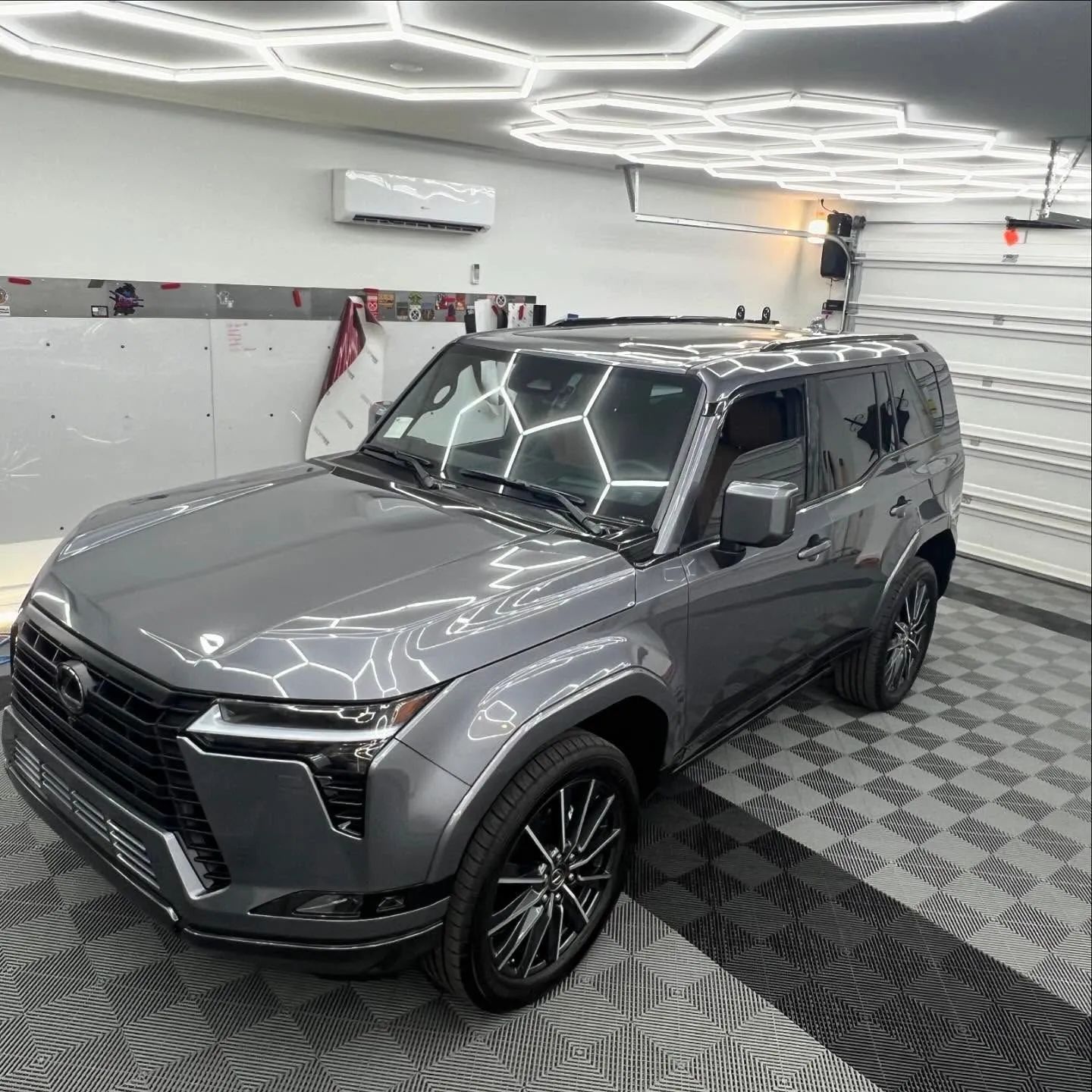
Quick Answer: Paint protection film is the product built to physically stop rock chips. Its thick polyurethane layer absorbs and disperses impact energy before it reaches your clear coat. Ceramic coating is a hard, thin chemical layer that boosts gloss, sheds water, and resists etching from bird droppings and hard water spots, but it does almost nothing against a rock hitting your hood at 65 miles per hour. If chip protection is your priority, film does the heavy lifting. If a durable, low-maintenance shine is your priority, coating does that job well. Most owners who want both end up layering coating over film.
What a Rock Chip Actually Does to Your Paint
A rock chip is not a scratch. A scratch drags across the surface and disturbs the clear coat or the paint layer beneath it. A chip is a point of concentrated impact. A piece of gravel kicked up by a semi truck on the 60 or the 202 hits your hood or bumper at highway speed, and all that kinetic energy lands in a spot the size of a pinhead. The clear coat cracks, sometimes the base coat cracks with it, and if the impact is hard enough you're looking at bare metal or plastic exposed to Arizona sun and moisture within seconds.
This matters because the two most popular protective products on the market were not designed to solve the same problem. One is built to absorb energy. The other is built to bond a hard, glossy shell to the paint surface. Understanding that distinction is the whole answer to which one actually stops chips.
How Paint Protection Film Stops Rock Chips
Paint protection film works because of what it physically is: a multi-layer sheet of thermoplastic polyurethane, typically applied in a thickness range that industry sources put around 6.5 to 8.5 mil for daily-driver applications, with some heavier films running thicker for maximum impact zones. That thickness is not cosmetic. It's the material doing mechanical work.
How the layers function
The film has a flexible topcoat, a thicker impact-absorbing middle layer, and an adhesive base that bonds to your factory paint. When a rock or piece of road debris strikes the surface, the film flexes and spreads that impact energy across a wider area instead of letting it concentrate on one point. That's the difference between a rock leaving a crater in bare clear coat and the same rock bouncing off film with barely a mark.
Self-healing is a bonus, not the main event
Because the topcoat is an elastomeric polymer, light scratches and swirl marks in the film itself can flatten back out when warmed by direct sun or warm water. The polymer chains loosen slightly with heat, the surface levels itself, and the mark disappears. That's a real feature, but it's a secondary benefit. The primary job of film is absorbing impact so the energy never reaches your paint at all.
Tip: If you're weighing full coverage against partial coverage, remember that rock chip patterns are not random. Hoods, front bumpers, mirror caps, and the leading edge of fenders take the overwhelming majority of hits on any vehicle that spends real time on the freeway. A front-end package targeting those exact zones gets you most of the protection of a full wrap at a fraction of the coverage area.
Owners sometimes assume a thicker film automatically means better protection in every scenario, and while thickness does correlate with impact resistance, installation quality matters just as much. A film with excellent impact ratings that's poorly seated at the edges or trapped with dust underneath won't perform the way the material is capable of. Surface prep and a clean install environment matter as much as the film spec itself.
How Ceramic Coating Handles Debris, and Where It Falls Short
Ceramic coating is a different kind of chemistry doing a different kind of job. It's a liquid polymer, usually silicon dioxide based, that cures into a hard, glass-like layer chemically bonded to your paint. Once cured, it creates a hydrophobic surface that sheds water, resists UV fading, and holds up against acid rain, tree sap, bird droppings, and hard water spots far better than wax or sealant ever could.
Where the confusion starts
Coating manufacturers love to advertise pencil hardness ratings like 9H, and a lot of owners hear that number and assume their paint is now nearly indestructible. It isn't. That 9H rating comes from a pencil hardness test, an industry scale used to measure resistance to a graphite tip, not the Mohs mineral hardness scale most people picture when they hear "hardness." On the Mohs scale, a 9H-rated coating actually measures closer to a 3 or 4, which is roughly the same hardness as ordinary window glass. Hard enough to resist fine swirl marks from improper washing. Nowhere near hard enough to stop a rock.
Why thickness is the real limiting factor
A cured ceramic coating typically measures only a handful of microns, thinner than a human hair. There simply isn't enough material there to absorb or disperse the kind of concentrated energy a highway-speed impact delivers. The coating will resist a fingernail drag or a light brush against a shopping cart. It will not flex or spread energy the way a multi-layer polyurethane film does, because it isn't built to flex at all. It's a rigid shell, and rigid shells crack under concentrated point impact rather than absorbing it.
That's not a knock on ceramic coating. It's simply not the tool for this particular job, the same way a car wax was never meant to stop a chip either. Coating earns its keep on gloss retention, chemical resistance, and cutting down the amount of scrubbing your paint needs week to week.
PPF vs Ceramic Coating: The Direct Comparison for Rock Chips
Put the two side by side on impact resistance specifically, and it isn't close. Film physically absorbs and disperses kinetic energy through a thick, flexible polymer structure engineered for exactly that purpose. Coating adds a hard, thin, chemically resistant layer that does an excellent job against everything except concentrated point impact, which is precisely what a rock chip is.
Where coating pulls ahead is in categories film was never meant to solve. Coating keeps your entire vehicle looking wet and glossy in every panel, including ones film owners often leave uncovered like roofs and door panels below the beltline. Coating also simplifies weekly washing more than film alone does, since the hydrophobic surface releases dust and water spots with less scrubbing.
So the honest framing isn't "which one is better." It's "which job needs solving." If rock chips on your hood and bumper are the actual problem you're trying to fix, film is the product engineered for that specific failure mode. If your priority is gloss, ease of cleaning, and resistance to chemical staining across the whole vehicle, coating earns its place.
Can You Run Both Together?
Yes, and it's one of the more common combinations we install. Film goes down first on the high-impact zones, typically the front bumper, hood, fenders, mirror caps, and rocker panels, then ceramic coating goes over the entire vehicle including the film itself. You end up with mechanical impact protection where you need it most, plus the gloss enhancement and hydrophobic properties of coating across every panel, film and factory paint alike.
Warning: Not every ceramic coating product is formulated to bond correctly to PPF the same way it bonds to painted clear coat. Applying the wrong coating chemistry over film can lead to poor adhesion, premature wear, or a hazy finish that doesn't match the rest of the vehicle. This is a case where the installer's product knowledge matters as much as the install technique itself, so ask specifically whether the coating being used is rated for application over film before it goes on.
Layering the two also means you get the self-healing behavior of the film underneath, since a properly formulated topcoat coating won't block the heat-activated healing response of the polyurethane layer beneath it. You're not choosing one property over the other. You're stacking them.
What This Looks Like on East Valley Roads
Desert driving adds its own wrinkle to this decision. Long stretches of open highway between San Tan Valley, Queen Creek, Florence, and Coolidge mean more time at higher speeds around gravel trucks, construction zones, and loose shoulder debris, which is exactly the driving profile that produces chip damage. At the same time, the intense UV load and summer heat here put real stress on gloss and color retention, which plays directly into what ceramic coating does best.
A lot of owners in this region end up needing both properties for different reasons. Chip protection because of the highway miles, and UV-stable gloss protection because Arizona sun doesn't take a day off. It's less about picking a winner and more about matching the product to the specific failure mode you're trying to prevent on your specific driving pattern.
Frequently Asked Questions
Does ceramic coating make paint protection film unnecessary?
No. Coating adds gloss, hydrophobic properties, and chemical resistance, but it does not add meaningful impact absorption. If chip protection is the concern, film is still the product doing that job even when coating is also applied.
Will film make my paint look different than a coated panel?
Quality film is designed to be optically clear and shouldn't create a visible color shift under factory paint. Gloss and matte film options exist specifically so the finish can match or intentionally contrast with the rest of the vehicle.
Can I apply ceramic coating over film myself, or does it need to be professionally paired?
It can technically be done at home, but matching the right coating chemistry to the film and prepping the surface correctly takes real experience. A mismatch between coating and film can trap moisture or cause bonding issues that show up months later.
Do I need full coverage film, or is partial front-end protection enough?
For most daily drivers, targeted coverage on the hood, front bumper, fenders, and mirror caps addresses the overwhelming majority of chip exposure. Full coverage makes more sense for vehicles that see extensive highway miles or owners planning to keep the car long term.
Choosing the Right Shield for Your Vehicle's Paint
Rock chips and dull, weathered finishes come from two different causes, so it makes sense that they need two different fixes. Paint protection film absorbs impact energy through its thick polyurethane structure, while ceramic coating locks in gloss and shields paint from UV damage and chemical staining. Neither product replaces the other. Once you know which failure mode you're actually trying to prevent, the decision becomes less about picking a winner and more about matching the right material to the right job on your vehicle.
For East Valley drivers logging serious highway miles, layering both often makes the most sense given how much gravel and sun exposure a daily commute can involve. With over 9+ years of experience, All God Auto
in Queen Creek, AZ has fine-tuned coverage plans that pair film on high-impact zones with coating across the rest of the vehicle. That combination keeps paint protected from chips while holding onto the kind of finish that resists fading through another long desert summer.